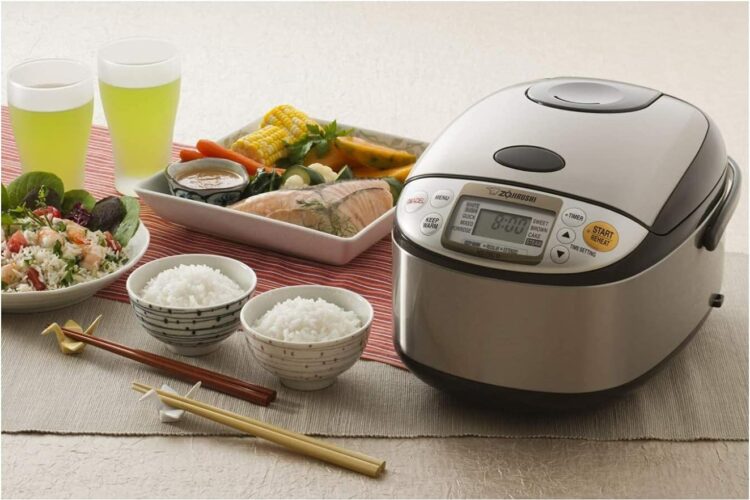
Rice cookers occupy a strange spot in a lot of kitchens. They’re not flashy, they don’t usually get featured in cooking videos, and yet for households that eat rice regularly, they tend to become one of the most-used appliances on the counter. The Zojirushi NS-TSC10 is a compact micom rice cooker built around exactly that kind of everyday reliability, designed to take the guesswork out of cooking rice consistently without requiring constant attention on the stovetop.
This article looks at what the NS-TSC10 actually offers, how people generally use a micom-style rice cooker like this one, who tends to get the most value out of it, and some practical points worth considering before buying. The goal is to give a grounded, balanced overview rather than a sales pitch, so you can weigh the details against your own cooking habits.
Key Features
The NS-TSC10 is built around micom (microcomputer) technology, which is the foundation for how it manages cooking adjustments automatically.
Micom Technology with Fuzzy Logic
At the heart of this rice cooker is micro computerized fuzzy logic technology. In practical terms, this means the cooker doesn’t just follow a fixed heating cycle. Instead, it uses internal sensors to monitor the cooking process and makes small, ongoing adjustments to temperature and timing as needed. The microcomputer judges the amount of rice in the pot and surrounds it with controlled heat throughout the soaking, cooking, and steaming stages.
This is what separates a micom rice cooker from a basic on/off model. Rather than simply heating until a thermostat trips, the NS-TSC10 adapts to what’s actually happening inside the pot. The result is rice that cooks more evenly, with less variation between batches.
5-1/2-Cup (Uncooked) Capacity
The cooker has a capacity of up to 5.5 cups of uncooked rice, which translates to roughly 10 cups of cooked rice. The capacity is measured using the included 180ml rice measuring cup (approximately 6.1 ounces), which is the standard measure for Japanese-style rice cookers. It’s worth noting that this differs from a standard US cup measure, so using the provided cup is important for consistent results.
This sizing generally suits small to medium households. For a family of three to five people, it can produce enough rice for a meal with some leftovers, depending on portion sizes. For one or two people, it offers plenty of capacity for meal prepping or cooking enough rice to last for a couple of days.
Multiple Menu Settings
The NS-TSC10 includes a range of pre-programmed menu settings, each calibrated for different types of rice and cooking applications:
- White/Sushi rice: The standard setting for everyday white rice, producing fluffy, separate grains.
- Mixed rice: For rice cooked with vegetables, meats, or other seasonings.
- Porridge: A gentler cooking cycle for rice porridge or congee.
- Sweet rice: For glutinous or sticky rice varieties.
- Brown rice: A longer, more gradual cooking cycle that accounts for brown rice’s tougher outer bran layer.
- Cake: A setting that allows the cooker to bake cakes directly in the inner pot.
- Steam: A dedicated setting for using the included steaming basket.
- Quick cooking: A faster cycle for when time is short.
This range of options makes the cooker useful for more than just plain white rice, and the pre-programmed settings remove much of the guesswork involved in cooking different rice varieties.
Steaming Basket
The cooker comes with a steaming basket that sits above the rice while it cooks. This allows you to steam vegetables, fish, dumplings, or other foods simultaneously with the rice. The dedicated Steam menu setting is calibrated for this purpose. It’s a practical feature that turns the rice cooker into a more versatile kitchen tool, letting you prepare complete meals in a single appliance.
Automatic Keep Warm and Extended Keep Warm
After the cooking cycle finishes, the cooker automatically switches to keep-warm mode to maintain the rice at a safe serving temperature. There are two keep-warm options: Regular Keep Warm and Extended Keep Warm. The extended setting is designed for keeping rice warm for longer periods without drying it out or affecting the texture as much as standard warming might.
There is also a reheating cycle for warming rice that has cooled down. This can be useful for leftovers or for rice that has been sitting in the refrigerator.
Delay Timer with Two Settings
The NS-TSC10 includes a programmable delay timer with two separate settings. This lets you load the rice cooker with rice and water at any time and set it to finish cooking at a specific later time. Having two timer settings means you can save different schedules—for example, one for weekday mornings and another for weekends—without having to reprogram each time.
Easy-to-Clean Design
The cooker features a clear-coated stainless steel exterior that resists fingerprints and wipes clean easily. The inner lid is detachable, which makes it simpler to clean thoroughly and prevent residue buildup. The inner cooking pan has a non-stick coating for easy rice release and cleaning. The power cord is retractable, which helps with storage and keeps the countertop tidier.
Black Thick Inner Cooking Pan
The inner cooking pan is described as a “black thick inner cooking pan” designed to provide even heating. The thickness of the pan helps distribute heat more uniformly, which contributes to more consistent cooking results.
LCD Control Panel
The control panel includes a large, easy-to-read LCD display that shows the cooking status, remaining time, and clock. The buttons are straightforward and clearly labeled, making the cooker relatively intuitive to use even for first-time owners.
Interchangeable Melody and Beep Signals
Instead of a simple buzzer, the NS-TSC10 uses interchangeable melody and beep signals to indicate when cooking is complete or when certain actions are needed. This is a small touch, but it makes the cooker more pleasant to use in a busy kitchen where multiple appliances might be beeping at once.
How It Can Be Used
While rice cookers are obviously centered on cooking rice, a micom model like this tends to be used for a slightly broader range of tasks than just plain white rice.
Everyday White Rice
The most common use case, the cooker is generally calibrated to produce consistent, fluffy white rice without the need to monitor a pot on the stove or worry about boiling over. The fuzzy logic technology adjusts the cooking cycle based on the specific conditions, helping to achieve a reliable texture time after time.
Sushi Rice and Mixed Rice
The dedicated sushi rice setting produces grains that are slightly firmer and more distinct, which is important for sushi and other Japanese rice dishes where the rice needs to hold its shape. The mixed rice setting is useful for dishes where rice is cooked with other ingredients like mushrooms, vegetables, or small pieces of meat, allowing the flavors to meld during cooking.
Brown Rice and Other Grains
Brown rice typically requires a longer cooking time and more water than white rice, and the dedicated brown rice setting accounts for these differences. The cooker can also handle other grains, though results may vary since the preset cycles are generally calibrated around rice.
Keeping Rice Warm for Extended Periods
The keep-warm function is frequently used to hold rice at serving temperature for hours after the initial cooking cycle. The extended keep-warm option is particularly useful for households eating at staggered times or for those who like to prepare rice well in advance of a meal.
Steaming Vegetables, Fish, and Dumplings
With the included steaming basket, the cooker can steam a variety of foods while rice cooks below. This is a practical way to prepare complete meals—rice cooking in the pot while vegetables or fish steam above. The steam menu setting is calibrated for this purpose.
Baking Cakes
The cake menu setting allows the cooker to bake cakes directly in the inner pot. This is an unexpected feature for a rice cooker, but it adds another layer of versatility for those who enjoy experimenting with different cooking methods.
Making Porridge or Congee
The porridge setting produces a soft, creamy rice porridge that is a common breakfast dish in many Asian cuisines. It can be customized with various toppings and is also useful for making oatmeal or other grain-based porridges.
Reheating Leftover Rice
The reheating cycle is designed to warm rice that has cooled down without drying it out or making it mushy. This is useful for leftovers or for rice that has been sitting in the keep-warm mode for an extended period.
Who It May Be Suitable For
A compact micom rice cooker tends to suit certain households and cooking habits particularly well.
Households That Eat Rice Frequently
For anyone making rice as a regular side dish or base for meals, having a dedicated appliance that handles it consistently can save a meaningful amount of stovetop attention over time. The convenience of set-it-and-forget-it cooking is especially valuable for busy households where time in the kitchen is limited.
People Who Want Consistent Results Without Guesswork
The micom technology is specifically designed to reduce the trial and error that can come with cooking rice on a stovetop, where water ratios and heat levels need more manual adjustment. This is particularly helpful for those who may not have developed an intuitive sense for stovetop rice cooking.
Smaller Households or Individuals
The 5-1/2-cup uncooked capacity is generally well suited to smaller portions, making it a practical size for one to three people rather than very large families. It can produce enough rice for several meals without creating excessive leftovers. For a household of one or two, it offers plenty of capacity without taking up too much counter space.
People with Limited Kitchen Space
The compact design of this model is generally easier to store and use in smaller kitchens compared to larger-capacity rice cookers. The dimensions are approximately 10-1/8 inches wide, 14 inches deep, and 8-1/2 inches high. The retractable power cord also helps with tidy storage.
Anyone Interested in Trying Different Rice Varieties
Built-in settings for sushi rice, brown rice, sweet rice, and mixed rice may appeal to those who like to prepare a variety of rice-based dishes rather than just standard white rice. This versatility encourages experimentation with different rice types and cooking applications.
Those Who Appreciate Thoughtful Design Details
The interchangeable melody signals, detachable inner lid for easy cleaning, and retractable power cord are small touches that add to the overall user experience. For people who notice and appreciate these kinds of details, the NS-TSC10 may feel like a well-considered product.
Busy Professionals and Families
The programmable delay timer and automatic keep-warm functions are particularly useful for busy schedules. You can set the cooker to finish cooking exactly when you arrive home, or keep rice warm for family members who eat at different times.
Larger families who regularly need bigger batches of rice, or those who only cook rice very occasionally, might find a larger-capacity cooker or simply a stovetop method better suited to their specific needs. The NS-TSC18, for example, offers a 10-cup capacity for larger households.
Important Things to Consider
There are a few practical points worth thinking about before choosing this type of rice cooker.
Capacity Limitations for Larger Groups
At 5-1/2 cups uncooked, this model is generally better suited for smaller households. Those frequently cooking for larger groups may need multiple batches or a bigger-capacity unit. Feeding four or five adults with rice as the main component of the meal may require two batches depending on portion sizes.
Water-to-Rice Ratio Guidance
While micom technology helps automate much of the cooking process, following the recommended water ratios for different rice types is still important for getting consistent results. The provided measuring lines on the inner pot are based on using the included rice cup (approx. 6.1 ounces / 180ml), so using a different measuring cup can throw off the ratio. The instruction manual provides guidance on water levels for different rice varieties and quantities.
Cooking Times
The NS-TSC10 is not a fast cooker. Standard white rice typically takes around 60 minutes on the regular setting, with the quick mode reducing that to about 40 minutes. Brown rice takes even longer. For those accustomed to stovetop cooking or pressure cookers, these times may feel long. However, the hands-off nature of the cooking process means you don’t need to actively monitor the rice during that time.
Cleaning the Inner Pan and Lid
Regular cleaning of the inner pan, lid, and steam vent is necessary to maintain performance and prevent residue buildup over time. The inner lid is detachable, which makes thorough cleaning easier. The manufacturer recommends hand washing the inner pan to help preserve the non-stick coating.
Non-Stick Coating Durability
Like most non-stick cooking surfaces, the inner pan’s coating can show wear over time with frequent use. Gentle cleaning and avoiding metal utensils can help extend its lifespan. Some users have noted that the inner pan in newer models feels thinner and lighter than in older versions, and there have been occasional reports of the pan spinning when stirring rice. These are points worth being aware of, though they don’t appear to be universal experiences.
Limited Functions Compared to Multi-Cookers
This type of dedicated rice cooker is generally focused specifically on rice and grains. Those looking for broader multi-cooking functions like sautéing, pressure cooking, or slow cooking would need a separate appliance. The NS-TSC10 does offer steaming and cake baking, but it is not a replacement for a multi-cooker.
Price Point
Micom rice cookers with fuzzy logic technology tend to be priced higher than basic on/off models. The NS-TSC10 sits in the mid-range of Zojirushi’s lineup—more affordable than induction heating (IH) models but more expensive than basic cookers. The question of whether the additional features justify the cost depends on how frequently you cook rice and how much you value consistency and convenience.
Learning Curve with Settings
While the controls are straightforward, new users may need a few attempts to get familiar with which setting works best for their preferred rice types and textures. Some experimentation is normal when adjusting to any new appliance. Reading the instruction manual and following the recommended water ratios for the first few uses can help reduce the learning curve.
Where It’s Made
The NS-TSC10 is manufactured in China, in a Zojirushi factory that the company states meets its highest standards. For some buyers, the country of origin is an important consideration, while for others, the brand’s quality control processes are what matter most.
Comparison of General Categories
Looking at how micom rice cookers compare to other general categories of rice-cooking methods can help put the NS-TSC10 in context.
Micom Rice Cookers vs. Basic On/Off Rice Cookers
Basic rice cookers typically use a single heating cycle that shuts off once the rice reaches a certain temperature. They are simple, affordable, and get the job done, but they offer less control and consistency across different rice types. Micom models like the NS-TSC10 make ongoing micro-adjustments throughout cooking, generally resulting in more consistent texture. The difference becomes more noticeable with brown rice or other grains that require more precise cooking conditions.
Micom Rice Cookers vs. Induction Heating (IH) Rice Cookers
IH rice cookers use electromagnetic heating for more even heat distribution and faster cooking. They often produce superior results, particularly for premium rice varieties, but they represent a significant step up in price. Standard micom cookers like the NS-TSC10 offer many of the same convenience benefits at a more accessible price point.
Dedicated Rice Cookers vs. Multi-Cooker Rice Settings
Multi-cookers that include a rice function can be convenient for those wanting to consolidate appliances. However, a dedicated rice cooker is generally optimized specifically for rice texture and consistency. The heating patterns and algorithms in dedicated rice cookers are often more refined for this specific purpose. For households that prioritize rice quality above all else, a dedicated rice cooker can be an advantage.
Stovetop Rice Cooking vs. Automated Rice Cookers
Cooking rice on the stovetop requires more active monitoring and a learned sense of timing. An automated cooker like the NS-TSC10 is designed to handle those adjustments without ongoing supervision. Stovetop methods offer more control for experienced cooks but require more attention and practice. For those who find stovetop rice cooking inconsistent or stressful, an automated rice cooker can be a meaningful upgrade.
Zojirushi NS-TSC10 vs. Zojirushi NHS Series
Within Zojirushi’s own lineup, the NS-TSC10 sits between the simpler NHS series and the more advanced induction models. The NHS series is more basic—straightforward and reliable, but without the fuzzy logic technology or multiple menu settings of the NS-TSC10. The NS-TSC10 is the model for buyers who want a 5.5-cup cooker but also care about having more than the basics—extra menu settings, a steaming basket, and the precision of micom technology.
The right choice ultimately depends on how often rice is part of your meals, how much consistency matters to you, and whether you’re looking for a dedicated appliance or one that can multitask across several cooking methods.
Frequently Asked Questions
What does “micom” mean in the context of rice cookers?
Micom stands for microcomputer, referring to the built-in technology that allows the rice cooker to make small, ongoing adjustments to heat and timing during the cooking cycle. This technology helps compensate for variables like ambient temperature and slight variations in water or rice quality, rather than relying on a single fixed heating phase.
What is fuzzy logic technology?
Fuzzy logic is a type of artificial intelligence that allows the rice cooker to “think” for itself, making nuanced adjustments based on multiple variables simultaneously. Rather than following a fixed program, the cooker senses how the rice is cooking and adjusts time and temperature accordingly. This results in more consistent cooking across different conditions.
Can this rice cooker handle brown rice as well as white rice?
Yes, the NS-TSC10 includes a specific setting for brown rice. Brown rice generally requires a longer cooking time and different water ratio compared to white rice, and the dedicated setting adjusts the cooking cycle to ensure the tougher outer bran layer is properly softened.
How long does it take to cook rice?
White rice generally takes approximately 60 minutes on the regular setting, with the quick mode reducing that to about 40 minutes. Brown rice typically takes longer. The exact time can vary based on the quantity being cooked and the specific setting selected.
How long can rice stay in keep-warm mode?
The cooker offers both Regular Keep Warm and Extended Keep Warm modes. Regular Keep Warm is designed for shorter periods, while Extended Keep Warm can maintain rice quality for longer durations. However, leaving rice in warming mode for extended periods, such as overnight, isn’t typically recommended due to potential texture changes.
Is the inner cooking pan dishwasher safe?
The manufacturer recommends hand washing the inner pan to help preserve the non-stick coating. Dishwasher detergents can be harsh on non-stick surfaces over time. The inner lid is detachable for easier hand cleaning.
Does this cooker work for grains other than rice?
The NS-TSC10 can be used for some other grains, though results may vary since the preset cycles are generally calibrated around rice cooking times and water absorption rates. Quinoa, for instance, has different water requirements and may not cook perfectly using a rice setting. Some experimentation may be needed.
Is a 5-1/2-cup capacity enough for a family of four?
This capacity is generally suited for smaller households, though it can work for a family of four depending on portion sizes and whether rice is a primary dish or a smaller side component of the meal. For a family of four eating rice as the main starch, this capacity may be adequate but leaves little room for leftovers. The larger NS-TSC18 model offers a 10-cup capacity for bigger households.
What accessories are included with the NS-TSC10?
The cooker comes with a steaming basket, rice measuring cup, nonstick rice spatula, and spatula holder.
What is the difference between the NS-TSC10 and NS-TSC18?
The NS-TSC10 has a 5.5-cup uncooked capacity (1.0 liter), while the NS-TSC18 has a 10-cup uncooked capacity (1.8 liters). Both models share the same features and technology, but the NS-TSC18 is larger and has a higher wattage (820W vs. 610W). The choice between them comes down to household size and how much rice you typically cook at once.
Where is the NS-TSC10 manufactured?
The NS-TSC10 is manufactured in China, in a Zojirushi factory that meets the company’s quality standards.
Conclusion
The Zojirushi NS-TSC10 is a compact micom rice cooker designed to bring consistent, hands-off rice preparation to everyday cooking. With its microcomputer-driven fuzzy logic technology, multiple menu settings, steaming basket, and keep-warm functions, it’s built to handle the kind of regular rice cooking that many households rely on without requiring constant stovetop attention.
While its capacity is best suited to smaller households and its functions remain focused specifically on rice and related dishes rather than broader multi-cooking tasks, that focus is part of what allows it to deliver consistent results for the specific job it’s designed to do. The thoughtful design elements—from the compact footprint and retractable cord to the detachable inner lid and clear LCD display—suggest a product that has been refined based on real-world use.
The fuzzy logic technology at its core represents a meaningful step up from basic rice cookers, offering more consistent results across different rice varieties and cooking conditions. For anyone who eats rice regularly and wants a dependable, low-maintenance way to prepare it, this kind of dedicated rice cooker can be a practical addition to the kitchen.
If consistent, fuss-free rice preparation sounds like something that would fit your everyday cooking routine, it may be worth taking a closer look at the Zojirushi NS-TSC10 and its specific features.