Rice is a staple food for billions of people around the world. It is versatile, comforting, and pairs well with countless dishes. Yet for those monitoring their carbohydrate or sugar intake—whether due to diabetes, weight management goals, or simply a desire for a more balanced diet—rice can present a challenge. White rice, in particular, has a relatively high glycemic index and can cause blood sugar levels to rise more quickly than some other carbohydrate sources.
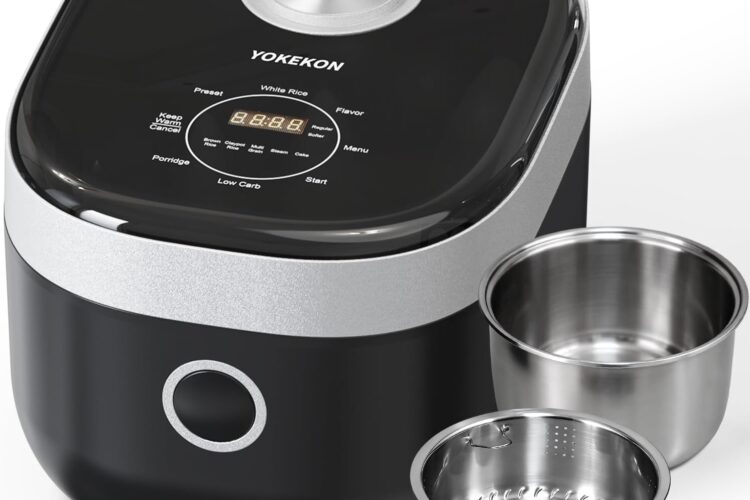
This has led to growing interest in kitchen appliances that can help make rice consumption more compatible with health-conscious lifestyles. One such appliance is the low-carb, low-sugar rice cooker. This article provides an informative overview of one model in this category: the Low Carb & Low Sugar 8 Cup Rice Cooker with a stainless steel inner pot, PFAS-free construction, and a range of programmable features. The goal is to help you understand what this type of rice cooker offers, how it works, who it might suit, and what to consider before making a decision.
Understanding Low-Carb and Low-Sugar Rice Cookers
Before examining the specific features of this rice cooker, it is helpful to understand the underlying concept. Traditional rice cookers cook rice by boiling it in water until the water is absorbed. In this process, the starches in the rice—which are broken down into sugars during digestion—remain largely in the grains themselves.
Low-carb and low-sugar rice cookers use a different approach. They typically employ a two-pot system: an inner pot with perforations (or a separate strainer basket) where the rice sits, and an outer pot that holds the water. During cooking, the rice is first submerged in water. As the starches dissolve, the starchy water drains away from the rice into the outer pot, leaving the grains to be steamed rather than boiled in their own starchy liquid.
This method can significantly reduce the digestible starch content of the cooked rice. Independent testing has shown that such appliances can reduce starch content by approximately 30 to 40 percent or more. Some studies have also indicated that rice cooked in this manner may have a lower post-meal glycemic response compared to rice cooked in a conventional rice cooker.
An additional benefit noted by some manufacturers is an increase in resistant starch—a type of starch that resists digestion in the small intestine and reaches the large intestine intact. Resistant starch behaves more like dietary fiber, potentially supporting gut health and contributing to a more gradual rise in blood sugar levels.
It is important to note, however, that the degree of starch reduction can vary depending on the specific model, the type of rice used, and the cooking settings selected. While these cookers can make rice more suitable for low-carb and low-sugar diets, they do not eliminate carbohydrates entirely. They are best understood as a tool for moderating carbohydrate content rather than removing it altogether.
Key Features of the Low Carb & Low Sugar 8 Cup Rice Cooker
This particular model brings together several features that distinguish it from both traditional rice cookers and other low-sugar alternatives. Below is a detailed look at its main characteristics.
Stainless Steel Inner Pot
The inner cooking pot is made from stainless steel. This material offers a number of practical advantages.
First, stainless steel is non-reactive. Unlike some materials that can impart metallic flavors or react with acidic foods, stainless steel preserves the natural taste of the ingredients being cooked. This is particularly relevant if you plan to use the rice cooker for dishes beyond plain rice, such as soups, stews, or tomato-based preparations.
Second, stainless steel is known for its durability. It resists scratching, chipping, and warping better than many coated alternatives. With proper care, a stainless steel inner pot can last for many years of regular use.
Third, and perhaps most significantly for health-conscious users, stainless steel does not require a non-stick coating. This leads directly to the next feature.
PFAS-Free Construction
PFAS—per- and polyfluoroalkyl substances—are a group of synthetic chemicals often used in non-stick coatings for cookware. They have earned the nickname “forever chemicals” because they do not break down easily in the environment or in the human body. Growing concerns about the potential health and environmental impacts of PFAS have led many consumers to seek out cookware that is explicitly PFAS-free.
This rice cooker addresses those concerns directly. The stainless steel inner pot contains no PFAS-based coatings. This eliminates the risk of chemical leaching from the cooking surface into food, a concern that has been raised with some traditional non-stick cookware, particularly when the coating becomes scratched or damaged.
It is worth noting that regulatory attention on PFAS is increasing. In 2026, for example, a French law banning PFAS in certain products came into effect, and there are ongoing discussions in various jurisdictions about further restrictions. Choosing PFAS-free cookware aligns with this broader trend toward safer, more sustainable kitchen products.
8-Cup Capacity
With an 8-cup capacity, this rice cooker is designed to serve families or households that regularly prepare meals for multiple people. An 8-cup rice cooker typically refers to the capacity for cooked rice, which is produced from approximately 4 cups of uncooked rice. This amount can yield roughly 8 to 12 servings, depending on portion sizes.
This capacity makes the cooker suitable for:
- Families of four or more
- Meal preppers who like to cook large batches for the week ahead
- Hosting gatherings or dinner parties
- Households that consume rice with multiple meals per day
It is also large enough to accommodate cooking other grains, such as quinoa, barley, or mixed grain blends, in quantities that make sense for a family setting.
Eight Menu Options
The inclusion of eight menu options adds considerable versatility. While the exact programs may vary, a typical selection might include settings for white rice, brown rice, sushi rice, porridge, soup, steam, cake, and—of course—the low-carb or low-sugar function.
Having multiple pre-programmed settings takes the guesswork out of cooking different types of rice and other dishes. Brown rice, for instance, requires a longer cooking time and different water ratios than white rice. Porridge needs a slower, gentler heat. A dedicated steam setting is useful for vegetables, dumplings, or fish. The cake setting opens up possibilities for desserts or savory baked items.
This range of options transforms the appliance from a single-purpose rice cooker into a more versatile multicooker that can handle a variety of everyday cooking tasks.
Steamer Basket
The inclusion of a steamer basket is a practical addition that extends the cooker’s functionality. Steaming is one of the healthiest cooking methods because it preserves nutrients that can be lost during boiling or frying.
With the steamer basket, you can simultaneously cook rice in the inner pot while steaming vegetables, fish, or dumplings above. This allows for complete, balanced meals to be prepared in a single appliance, saving both time and energy.
Some ideas for using the steamer basket include:
- Steaming broccoli, green beans, or asparagus while rice cooks below
- Preparing fish fillets with ginger and scallions
- Cooking dumplings or bao buns
- Steaming eggs for a soft-boiled texture
- Reheating leftovers without drying them out
24-Hour Delay Timer
The 24-hour delay timer is a convenience feature that many users find valuable. It allows you to load the rice cooker with rice and water at any time of day and set it to begin cooking at a specified later time.
For example:
- You can prepare ingredients in the morning and set the timer so that rice is ready exactly when you return from work.
- You can set it to finish cooking just before a family meal, ensuring freshly cooked rice without any last-minute effort.
- For breakfast porridge or oatmeal, you can set it the night before and wake up to a hot, ready-to-serve meal.
The timer is programmable up to 24 hours in advance, offering flexibility for a wide range of schedules and routines.
Auto Keep Warm
Once cooking is complete, the auto keep-warm function maintains the rice at a safe serving temperature without overcooking or drying it out. This is particularly useful for families where members may eat at different times, or for those who like to prepare food in advance.
The keep-warm feature ensures that rice remains fluffy and warm for an extended period, reducing the need to reheat and potentially compromise texture.
Dishwasher Safe
The stainless steel inner pot and steamer basket are dishwasher safe. This makes cleanup significantly more convenient, especially after cooking sticky or starchy foods. For those who prefer hand washing, stainless steel is also easy to clean with warm, soapy water and a soft sponge.
How the Low-Carb Function Works
To better appreciate what this rice cooker offers, it is useful to understand the mechanics of its low-carb cooking mode in more detail.
The process generally follows these steps:
- Rice is placed in the inner pot (or a dedicated strainer basket) that has holes or perforations allowing water to flow through.
- Water is added to the outer pot. The rice is initially submerged in this water.
- As the water heats up, the starches on the surface of the rice grains dissolve and disperse into the surrounding water.
- The starchy water drains away from the rice into the outer pot, either through the perforations in the inner pot or through a separate drainage mechanism.
- The rice is then steamed using the remaining water and steam, rather than being boiled in the starchy liquid.
- The result is rice with a lower content of digestible starch and, consequently, fewer carbohydrates that convert to sugar during digestion.
Different manufacturers may use slightly different terminology or mechanisms—some refer to “sugar-reducing” technology, others to “low-carb” or “low-GI” cooking. But the underlying principle remains similar: separating the starch from the rice grains during the cooking process.
The rice water that is drained away contains a significant amount of dissolved sugars and starches. For this reason, it is generally not recommended for consumption by individuals managing their blood sugar levels.
Practical Uses and Meal Ideas
Beyond simply cooking plain white rice, this rice cooker’s features open up a variety of practical applications. Here are some ways it can be used in daily meal preparation.
Everyday Rice Cooking
For basic rice preparation, the cooker offers multiple settings to accommodate different rice varieties:
- White rice: The standard setting produces fluffy, separate grains.
- Brown rice: Requires a longer cooking cycle and more water; the brown rice setting handles this automatically.
- Sushi rice: A dedicated setting can achieve the slightly sticky texture needed for sushi and onigiri.
- Mixed grains: Settings for mixed grain or multigrain rice allow you to combine rice with barley, quinoa, or millet.
Low-Carb Rice
The low-carb or low-sugar function is the cooker’s signature feature. It can be used with white rice, brown rice, or other grains to reduce their starch content. This makes rice more compatible with:
- Diabetic meal plans
- Low-glycemic diets
- Weight management programs
- General health-conscious eating
One-Pot Meals
With the steamer basket and multiple cooking programs, the rice cooker can be used to prepare complete one-pot meals. For example:
- Rice with steamed fish and vegetables: Place rice and water in the inner pot, season fish fillets and place them in the steamer basket with some vegetables, and cook using the appropriate setting.
- Chicken and rice: Add seasoned chicken pieces to the rice before cooking, allowing the flavors to meld as the rice cooks.
- Rice cooker congee or porridge: The porridge setting produces a smooth, comforting rice porridge that can be customized with toppings.
Steaming
The steamer basket is not just for vegetables. It can also be used for:
- Dumplings and dim sum: Steam frozen or fresh dumplings to perfection.
- Seafood: Steam fish, shrimp, or mussels with aromatics.
- Eggs: Steam eggs for a soft, custard-like texture.
- Reheating: Steam leftover foods to restore moisture without making them soggy.
Soups and Stews
The soup setting allows the cooker to function as a small slow cooker or soup maker. You can prepare:
- Vegetable soups
- Chicken or beef broth
- Bean and lentil stews
- Curries
Desserts
Some rice cooker models include a cake setting, which opens up the possibility of:
- Steamed cakes
- Rice pudding
- Mochi or other rice-based sweets
Who Might Find This Rice Cooker Suitable
This rice cooker is not for everyone, and that is perfectly fine. Understanding who it may suit best can help you determine whether it aligns with your needs.
Individuals Managing Blood Sugar Levels
For people with diabetes or prediabetes, managing carbohydrate intake is a daily concern. White rice, in particular, can cause rapid spikes in blood glucose. A low-sugar rice cooker offers a way to continue enjoying rice while moderating its glycemic impact. Some research has shown that rice cooked in low-carbohydrate rice cookers can produce a lower post-meal glucose response compared to rice from conventional cookers.
It is important to emphasize, however, that this should be seen as one tool among many. Dietary choices, portion control, and overall meal composition remain critical factors in blood sugar management.
Those Following Low-Carb or Low-Glycemic Diets
Low-carb diets typically allow between 60 and 130 grams of carbohydrates per day. For someone following such a diet, the carbohydrate reduction offered by this cooker can make a meaningful difference in daily totals. It allows for greater flexibility in meal planning without exceeding carbohydrate targets.
Similarly, low-glycemic diets emphasize foods that have a slower, more gradual effect on blood sugar. By reducing the rapidly digestible starch content of rice, this cooker produces rice that aligns more closely with low-GI dietary principles.
Families
The 8-cup capacity makes this cooker well-suited for families. Parents who are health-conscious may appreciate the ability to prepare lower-carb rice for the whole family without cooking separate batches. The versatility of multiple menu options also means the cooker can handle different family members’ preferences—white rice for some, brown rice for others, porridge for children or elderly members.
Meal Preppers
For those who like to prepare meals in advance, the large capacity and delay timer are valuable assets. You can cook a large batch of rice at the beginning of the week and portion it out for lunches and dinners. The keep-warm function ensures that rice stays at the right temperature if you are preparing meals at different times.
Individuals Concerned About Cookware Safety
With growing awareness of PFAS and other chemicals in cookware, many consumers are actively seeking out products made from safer materials. The stainless steel, PFAS-free construction of this rice cooker directly addresses these concerns. For those who have decided to phase out non-stick cookware from their kitchens, this represents a practical alternative.
Those Who Value Versatility
If you appreciate kitchen appliances that can perform multiple functions, the eight menu options and steamer basket make this cooker a versatile addition. It can replace or supplement a dedicated rice cooker, steamer, and even some functions of a slow cooker.
Important Things to Consider
Before deciding on a low-carb rice cooker, there are several factors worth keeping in mind.
The Low-Carb Function Is Not a Cure-All
While low-carb rice cookers can reduce the starch content of rice, they do not eliminate carbohydrates entirely. Depending on the model and the type of rice, reductions may range from around 20 to 40 percent. This is a meaningful reduction, but it does not make rice a low-carbohydrate food in absolute terms.
Additionally, the effectiveness of the low-carb function can vary. Factors such as rice variety, water ratio, and cooking time all play a role. Some users may find that they need to experiment with different settings to achieve their desired results.
Texture Differences
Rice cooked in a low-sugar rice cooker may have a slightly different texture compared to conventionally cooked rice. Some users have reported that reduced-sugar rice feels softer and contains more water per 100 grams than regularly cooked rice. This is not necessarily a drawback—many people enjoy the texture—but it is something to be aware of if you have very specific preferences for how rice should turn out.
Learning Curve
Like any appliance with multiple settings and functions, there may be a learning curve. Understanding which setting to use for different types of rice, how much water to add, and how to use the steamer basket effectively may take a few attempts. The included instruction manual and some experimentation will help you get the most out of the cooker.
Counter Space
At 8 cups capacity, this rice cooker is not a compact appliance. It will require a reasonable amount of counter space. Before purchasing, it is worth measuring your available kitchen space to ensure the cooker will fit comfortably.
Stainless Steel vs. Non-Stick
Stainless steel inner pots have many advantages, but they are not non-stick. Rice, particularly sticky varieties like sushi rice or glutinous rice, may adhere to the bottom of the pot more than it would in a non-stick-coated pot.
This can be managed by:
- Rinsing rice thoroughly before cooking to remove excess surface starch
- Using the correct water-to-rice ratio
- Allowing the rice to rest for a few minutes after cooking before serving
- Soaking the pot in warm water after use to loosen any stuck-on rice
The dishwasher-safe feature makes cleaning easier, but some hand-cleaning may still be required for stubborn residue.
Cost
Low-carb rice cookers with stainless steel inner pots and multiple functions tend to be priced higher than basic rice cookers. This is due to the more complex engineering, the higher-quality materials, and the additional features. It is worth considering whether the health benefits and versatility justify the investment for your household.
How This Rice Cooker Compares to General Categories
To provide context, it can be helpful to compare this type of rice cooker with other general categories of rice cookers. The goal here is not to declare one category superior, but to highlight the differences so you can make an informed choice based on your priorities.
Basic Rice Cookers
Basic rice cookers are simple, affordable appliances with a single function: cooking rice. They typically have an on/off switch and a keep-warm function. The inner pot is often coated with a non-stick material.
Advantages: Low cost, simple operation, widely available.
Limitations: No low-carb function, limited versatility, potential concerns about non-stick coatings.
Multi-Function Rice Cookers
Multi-function rice cookers offer a range of pre-programmed settings for different types of rice, grains, and sometimes other dishes like soup or cake. They may include a steamer basket and a delay timer.
Advantages: Versatility, convenience, multiple cooking options.
Limitations: May still use non-stick coated inner pots; low-carb function is not always included.
Low-Carb/Low-Sugar Rice Cookers
This category is specifically designed to reduce the starch and sugar content of rice. They typically use a two-pot or strainer system and may include other multi-function features.
Advantages: Targeted health benefits, PFAS-free options available, versatile.
Limitations: Higher cost, learning curve, texture differences.
Induction Heating (IH) Rice Cookers
Induction heating rice cookers use electromagnetic technology to heat the entire inner pot evenly, resulting in more consistent cooking. Some IH models also include low-carb functions.
Advantages: Superior cooking consistency, often include advanced features.
Limitations: Premium pricing, may still use coated inner pots.
The Low Carb & Low Sugar 8 Cup Rice Cooker sits at the intersection of the multi-function and low-carb categories, with the added benefit of a stainless steel, PFAS-free inner pot.
Frequently Asked Questions
How much carbohydrate does the low-carb function actually remove?
The amount of carbohydrate reduction can vary depending on the specific model, the type of rice, and the cooking settings. Independent testing of similar products has shown reductions in starch content ranging from approximately 20 to 40 percent. Some manufacturers report reductions of up to 50 percent. It is advisable to treat these figures as approximate and to consider the cooker as a tool for moderation rather than complete elimination.
Can I cook other grains in this rice cooker?
Yes. The multiple menu options typically include settings for brown rice, mixed grains, quinoa, and porridge. You can also use it to cook barley, millet, or other whole grains, though you may need to adjust water ratios and cooking times based on the specific grain.
Is stainless steel safe for cooking?
Stainless steel is considered one of the safest materials for cookware. It is non-reactive, does not leach chemicals into food, and does not require synthetic coatings. The stainless steel used in this rice cooker is food-grade and designed for durability.
What does PFAS-free mean, and why does it matter?
PFAS-free means the product does not contain per- and polyfluoroalkyl substances, a group of synthetic chemicals used in some non-stick coatings. PFAS have been linked to environmental persistence and potential health concerns. Choosing PFAS-free cookware eliminates exposure to these substances from the cooking surface.
Can I put the inner pot in the dishwasher?
Yes, the stainless steel inner pot and steamer basket are dishwasher safe. This makes cleanup convenient. If you prefer hand washing, use warm, soapy water and a soft sponge. Avoid abrasive cleaners or steel wool, which can scratch the stainless steel surface.
How long does the keep-warm function last?
The auto keep-warm function maintains the rice at a safe serving temperature after cooking is complete. The exact duration can vary, but many rice cookers can keep rice warm for several hours. It is generally recommended to consume rice within a few hours of cooking for the best texture and food safety.
Can I use the low-carb function with brown rice?
Yes, the low-carb function can be used with brown rice as well as white rice. Brown rice contains more fiber and nutrients than white rice, and the low-carb function can further reduce its digestible starch content. You may need to use the brown rice setting or adjust cooking times, as brown rice takes longer to cook.
Is the rice water safe to drink?
The water that drains away during the low-carb cooking process contains dissolved sugars and starches removed from the rice. For individuals managing blood sugar levels, it is generally recommended not to consume this water. For others, it is not harmful but offers little nutritional value compared to the rice itself.
Conclusion
The Low Carb & Low Sugar 8 Cup Rice Cooker represents an interesting option for households looking to make rice consumption more compatible with health-conscious eating patterns. Its stainless steel, PFAS-free inner pot addresses growing concerns about cookware safety, while its low-carb function offers a practical way to moderate the starch content of rice.
The 8-cup capacity makes it suitable for families and meal preppers, and the eight menu options, steamer basket, and 24-hour delay timer add considerable versatility. It can cook more than just rice—steaming vegetables, preparing soups, and even making desserts are all within its capabilities.
That said, it is important to approach the low-carb function with realistic expectations. It reduces carbohydrate content but does not eliminate it. Texture may differ slightly from conventionally cooked rice, and there may be a learning curve as you become familiar with the various settings.
For those who value cookware safety, appreciate kitchen versatility, and are looking for ways to moderate their carbohydrate intake without giving up rice entirely, this type of rice cooker is worth considering. As with any kitchen appliance, the best choice depends on your specific needs, cooking habits, and priorities.